How to find B2B leads in 2026
Cold lists are dead. Intent-driven prospecting is the new baseline. Here is the exact stack and workflow that produces booked calls, not bounced emails.
- Buying lists is obsolete, inbox providers punish unpersonalized sends.
- The best 2026 prospects come from observable intent on the live web.
- A good ICP is a sentence, not a spreadsheet.
- 3 to 8 signals is the sweet spot. Below 3 you miss accounts. Above 8 you dilute focus.
Why 2026 is different
Three things changed: inbox providers now punish unpersonalized sends, intent data is cheap, and AI writes better openers than most SDRs. The teams that won in 2024 stopped buying lists. The teams winning in 2026 buy signals.
If you are still exporting a list of 10,000 contacts and blasting a sequence, expect reply rates below 1% and a deliverability spiral within three weeks.
Step 1, Define a precise ICP
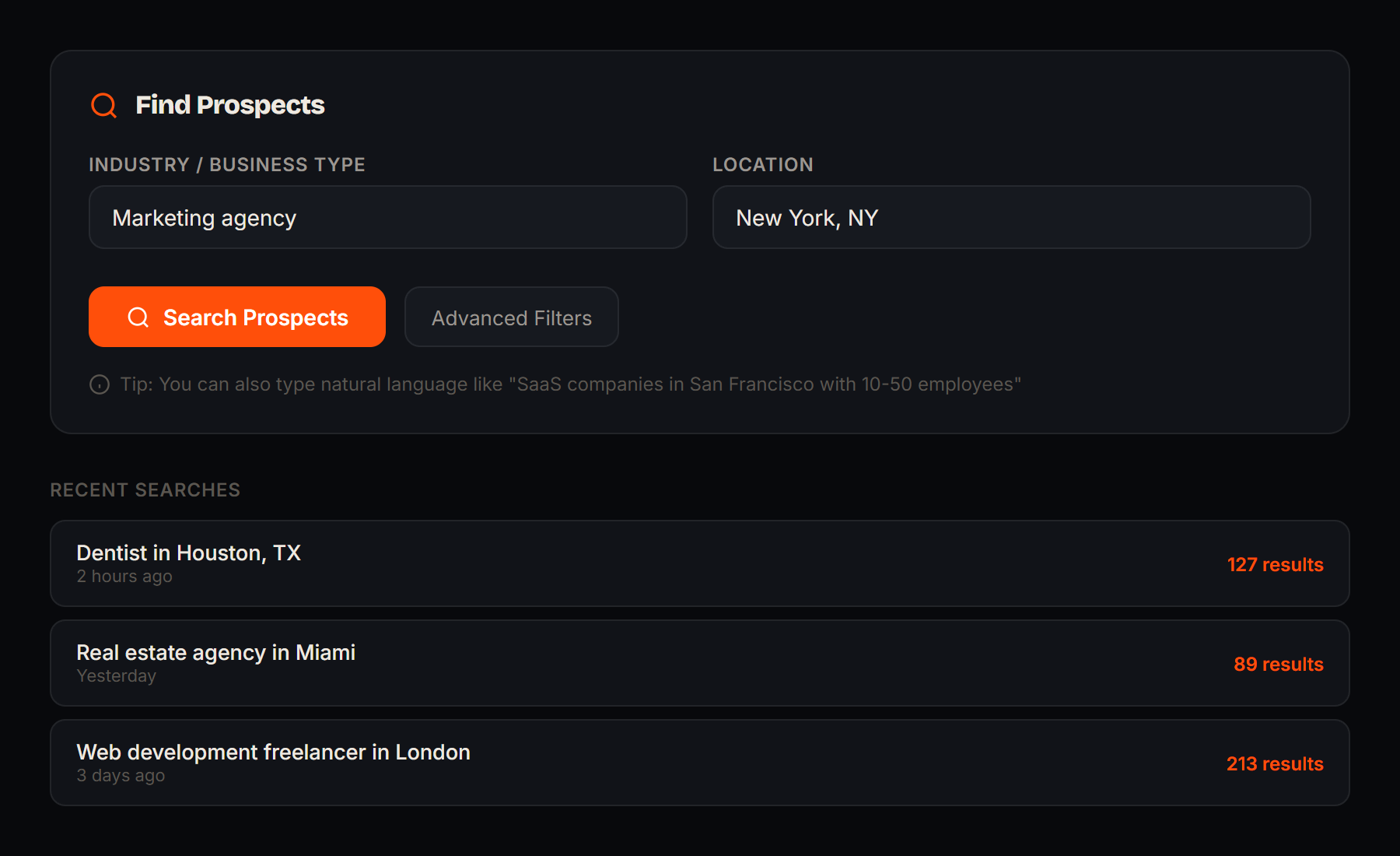
A good ICP is a sentence, not a spreadsheet. "Marketing agencies in New York with 10-50 employees that are hiring for growth roles" beats "SMB, North America, B2B".
Leadzy turns a plain-English ICP into a structured filter: industry, location, employee count, revenue band, tech stack, and buying signals.
- Industry vertical (be specific)
- Location (country, state, or city)
- Company size band
- Triggers: hiring, funding, tool adoption
Step 2, Gather intent signals
Intent is any observable action that suggests a company is in-market. Examples: a new hire for a role you sell to, a tool migration, a funding round, a conference attendance, a pricing page view.
Leadzy ships 60+ detectors that fire in real time, so your pipeline refreshes without you lifting a finger.
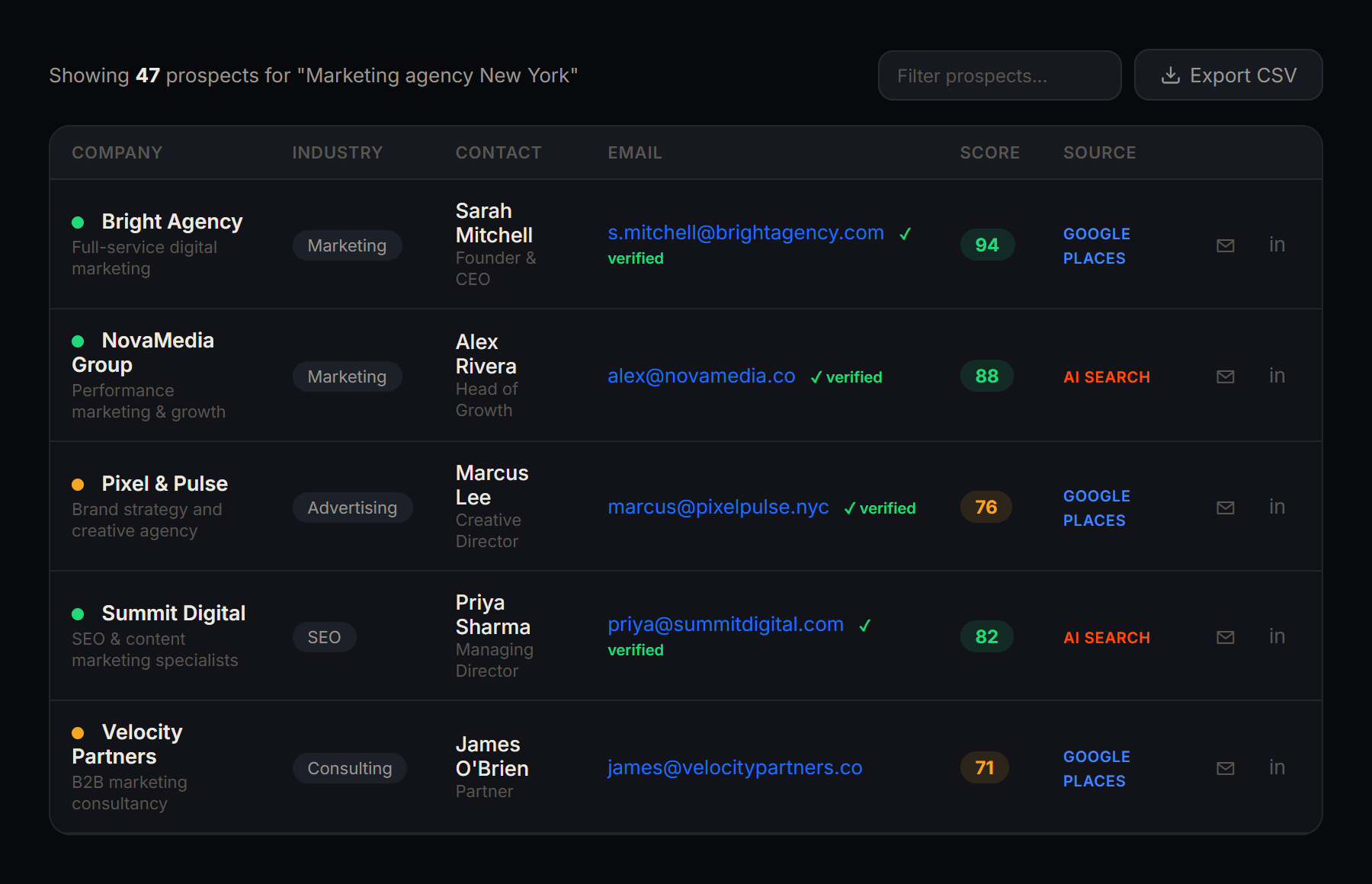
Step 3, Enrich with verified emails
Two thirds of B2B email failures come from stale catch-all domains or role-based addresses that filter hard. Every email Leadzy surfaces is SMTP-verified at the moment of enrichment and scored for deliverability.
Step 4, Personalize outreach
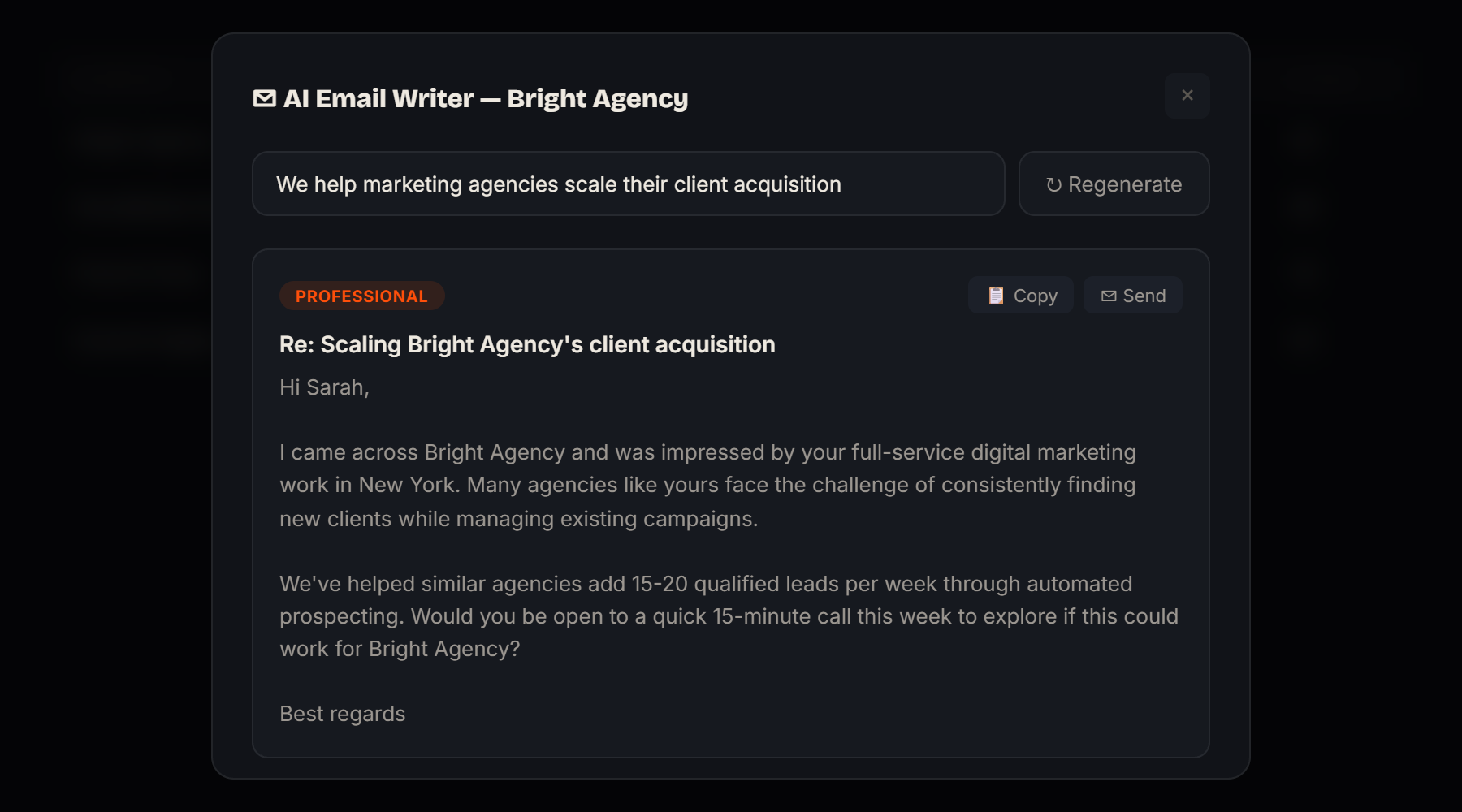
Generic personalization ({first_name}, {company}) does not move the needle. First-sentence personalization grounded in real research (a recent hire, a product launch, a review) lifts reply rates 2-4x.
Leadzy writes the first sentence for you, pulled from the same signal that triggered the lead.
Step 5, Measure and iterate
Track three metrics weekly: reply rate, positive reply rate, and meetings booked. Anything else is noise at this stage.
If reply rate is below 8%, the problem is usually targeting. Below 3% positive reply, the problem is usually the offer.
"A list of ten thousand contacts used to be an asset. In 2026, it is a liability."